


Messages
3.8299.00 Reviews
App Specs
- Version
- 2.8
- Updated On
- License
- Free
- Downloads
- 1,000,000+
- Developer
- Text and SMS Messaging apps
- Categories
- Communication
- Platform
- Android
Screenshots



 Analysis by AppCompare
My experience with Messages starts with a familiar problem: I need to contact someone quickly, but I don’t want to convince them to install another chat service first. That makes a straightforward texting app useful for everyday coordination, especially when a conversation needs to reach people with different habits or devices. This is a free Android communication app from Text and SMS Messaging apps, and its appeal is practical rather than flashy: get a message out, keep the exchange moving, and return to whatever you were doing.
The first decision is whether this kind of app fits the way you communicate. If most of your conversations are ordinary one-to-one texts, reminders, or short exchanges with family and coworkers, a familiar SMS workflow can be more convenient than asking everyone to join a new platform. If your circle already relies on a dedicated internet-based messenger for calls, large media files, or shared spaces, switching may add friction instead of removing it. I’d treat Messages as a useful everyday messaging option, not as an automatic replacement for every communication tool.
Starting with a real everyday need
Picture a simple situation: I’m leaving work, a friend is waiting at a busy entrance, and we need to settle on a meeting point. I can send a short text, explain the landmark, and keep the exchange in the same conversation if plans change. The value is not a long feature checklist; it is having a low-effort way to make a small decision with someone who may not use the same chat app I do.
For that kind of use, the interface matters. I want the contact and conversation to be easy to find, the message field to be obvious, and the thread to remain readable when replies arrive later. A simple design can help keep quick exchanges quick. It also means I should not mistake a clean screen for proof that every advanced option is available in every conversation: messaging capabilities can depend on the recipient, device, carrier, and connection.
Simplicity Meets Functionality
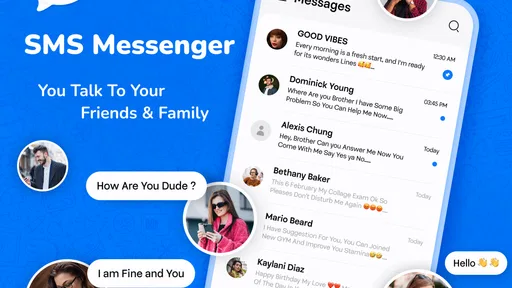
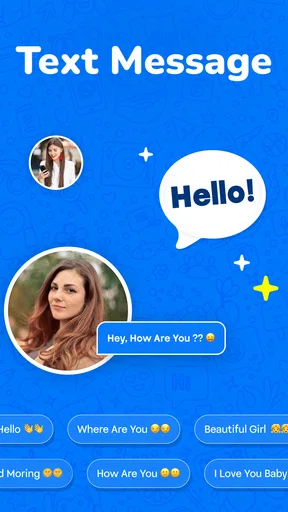
Messages is all about keeping things simple yet effective. From its clean interface to its intuitive design, it’s clear that user experience is at the forefront. You won’t need a guidebook to figure out how to send a text or share a photo with this app.
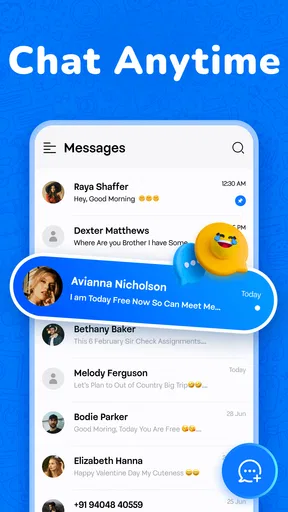
One of the first things you’ll notice is the streamlined chat interface. Conversations are neatly organized, and switching between chats feels seamless. The app’s design ensures that you’re not overwhelmed by too many options, but it still packs enough features to keep things interesting.
Stay Connected with Ease
Whether you’re texting a friend across town or coordinating with a group of colleagues, Messages has you covered. The app supports SMS, MMS, and RCS, making it versatile enough to handle various communication needs. RCS, in particular, brings rich media sharing and read receipts, bringing it closer to the functionality of other popular messaging apps.
Worth Reading Before You Choose

EA SPORTS FC Mobile 26 Is a Bigger Football Game, but It Takes Time

Flipboard Shows What News Apps Must Do Beyond the Feed

Switching to Android Auto Means Rethinking Your Driving Routine

Google Calendar Makes a Crowded Week Easier to Manage

Ludo King Makes the Most of the Minutes Between Plans

Baby Panda World Brings Quick Play to Modern Phones, but Its Game Library Feels Busy
Group chats are a breeze to manage, allowing you to add or remove participants and name your groups. This makes it perfect for both personal and professional use.
Multimedia Sharing
Sharing photos, videos, and even voice messages is straightforward. The multimedia capabilities of Messages are robust, allowing you to easily send high-quality images and videos without a hitch. The app also supports sharing your location, which can be a lifesaver when meeting up with friends or coordinating events.
And let’s not forget emojis and stickers! They’re integrated right into the conversation, adding a fun and expressive way to communicate beyond words.
Security and Privacy
In a world where privacy is increasingly important, Messages offers end-to-end encryption for RCS messages, ensuring your conversations stay private. This feature gives peace of mind, especially when discussing sensitive information.
Additionally, the app provides spam protection by automatically identifying and filtering out potential spam messages, keeping your inbox clutter-free.
Integration and Compatibility
Messages doesn’t just stop at texting; it integrates smoothly with other apps and services. On Android, you can link it to Google Assistant for hands-free messaging, while iOS users can sync with iMessage for a cohesive experience across devices.
Notifications are customizable, allowing you to prioritize certain contacts or mute conversations that you’d rather not be disturbed by. It’s all about flexibility and control over your messaging experience.
Customization and Personal Touch
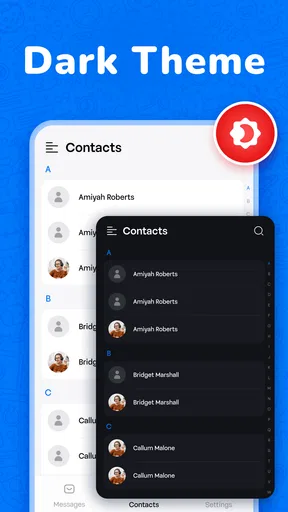
Personalization is key, and Messages lets you customize your chat backgrounds, notification sounds, and even the way messages are displayed. It’s these small touches that allow users to tailor their messaging experience to suit their style.
Emoji and sticker packs can be downloaded to add more flavor to your conversations, and with the app’s smooth integration, you can easily switch between them.
What happens between send and reply
In day-to-day use, I find it helpful to treat a text as a small handoff rather than assume the other person has seen it. A message can start a plan, but a time-sensitive arrangement still benefits from a clear request and a direct confirmation. For example, I’d write, “I’m at the north entrance; are you there?” rather than send a vague “Here” that leaves the recipient guessing. This is a writing habit, not a special app feature, but it makes the conversation more useful.
For group coordination, I’d keep the thread focused on one task and make the next action obvious: who is picking something up, where to meet, or when the plan changes. Naming a group can help distinguish an ongoing family or work thread from a one-off arrangement, but it does not replace good message hygiene. If a conversation has many unrelated replies, a separate group or a purpose-built collaboration tool may be easier to follow.
Media introduces a different trade-off. A photo can communicate a location or an item more clearly than a description, while a short text is often the better choice when a person has limited connectivity or wants a quick answer. Before sending several images, I’d consider whether one well-chosen picture will do. It keeps the exchange easier to scan and avoids turning a simple question into a stream of attachments.
Choosing the right channel for the job
Compared with internet-first messengers, an SMS-oriented app has a useful advantage: it can serve as a common route for basic contact when people have not settled on one shared service. The trade-off is that the experience may not be identical for everyone in a thread. Rich features depend on the messaging method available between participants, so I would not assume that a feature such as read receipts or richer media behaves the same way in every exchange.
A dedicated messenger is usually the better choice when a whole group already uses it and depends on its particular tools, such as frequent voice or video conversations or ongoing community discussions. Email is still more suitable for longer details that need a subject and a record people can search later. Messages makes most sense in the middle: quick, direct exchanges where keeping the barrier to contact low matters more than building a complete workspace.
It is also worth separating the app’s identity from the word “Messages,” which many devices use for their own built-in texting software. This review concerns the Android app published by Text and SMS Messaging apps, not every app with the same generic name. Before changing your default messaging app, check that you are selecting the intended one and that your usual contacts and conversations behave as you expect. A cautious first trial with a non-urgent conversation is a sensible way to judge the fit.
Security, cost, and practical expectations
Privacy claims need to be read with care. The app’s RCS conversations are described as using end-to-end encryption, but that should not be taken to mean every message type or every conversation has the same protection. I would avoid putting highly sensitive details into a thread unless I know which messaging method is active and what protection applies. For passwords, financial information, or confidential work material, a channel specifically approved for that purpose is a safer choice.
Spam filtering can reduce clutter, but no filter should be treated as infallible. I’d still look closely at unexpected messages that ask me to act urgently, open something, or share personal details. If an important text seems to have disappeared, checking the conversation and any filtered-message area available on the device is more sensible than assuming the sender never wrote.
The app is free to start, though it offers in-app purchases priced from $1.99 to $24.99 per item. I would first decide whether its everyday messaging workflow suits me before paying for anything; a purchase is not a reason to expect that the recipient’s device, network, or messaging setup will support a particular capability. Its Everyone age rating makes it broadly suitable, but younger users still benefit from ordinary guidance about unknown senders and sharing personal information.
Who will appreciate it—and who may not
I can see this app working well for someone who wants a simple place for routine texts and does not want every contact to join the same social platform. It may also suit a person who prefers direct conversations over a crowded feed of channels, reactions, and group spaces. The developer is Text and SMS Messaging apps, and the app’s store presence includes over one million installs; that gives a prospective user some context for its reach, but it does not tell me whether its particular interface will suit their habits.
On the other hand, I would look elsewhere if I needed a single service for reliable cross-platform group collaboration, frequent calls, or a consistent feature set across every participant. I would also hesitate to move an established messaging routine until I had checked how the app handles the conversations and devices I actually use. A messaging app is only convenient when the people I need to reach can receive and respond through the route I choose.
One useful way to evaluate it is to try a modest workflow: send a plain text to a familiar contact, then test a group exchange or a photo only if those are part of your normal routine. Notice whether replies are easy to track, whether notifications interrupt you at the right times, and whether the recipient sees the message in the form you expected. That small test tells you more than judging an app by its icon or by a feature list.
Where the workflow can break
The main friction point is the handoff between people and messaging methods. If someone is unavailable, has a different setup, or cannot use the richer option in a thread, a message may not produce the quick response I hoped for. For an urgent plan, I would keep the wording specific and use a second agreed channel if the first attempt matters. That is not a flaw unique to this app; it is a limitation of relying on any messaging route as though delivery automatically means attention.
There is also a practical distinction between a message being sent and a plan being settled. A read indicator, where supported, does not confirm agreement, and no indicator does not explain why a person has not replied. I try to close the loop with a clear confirmation when timing matters, rather than infer too much from the status of a thread. That habit is especially useful in work groups, where silence can mean someone is busy rather than that they accepted a task.
Messages is currently at version 2.8 and requires Android 8.0 or later. Its average rating is 3.8 from around 9,800 ratings, with 299 written reviews, so there is a substantial public response but no reason to treat a score as a substitute for trying the workflow yourself. It was released on September 10, 2025; if you are deciding whether to install it, compatibility with your own device and the way your contacts communicate matter more than the age of the app.
Final Thoughts
So, is Messages worth your time? Absolutely. It’s a reliable, user-friendly app that handles your messaging needs with grace and efficiency. Its robust features, combined with a focus on privacy and security, make it a standout choice in the crowded world of messaging apps.
Whether you’re chatting with friends or staying connected with colleagues, Messages offers a versatile platform that adapts to your lifestyle. If you haven't already, give it a try and see how it fits into your daily communication routine. You might just find it becoming your new favorite way to stay in touch.
My recommendation is more measured than a blanket endorsement: I’d choose it when straightforward messaging is the priority and the people I contact can use the same basic route. I’d keep a dedicated messenger or another work-approved channel for situations that depend on a shared set of richer tools or stronger guarantees. If you want an everyday texting option, the free starting point makes a low-stakes trial reasonable; just confirm the practical details with the people you message before making it your only way to stay in touch.
Pros
- User-friendly interface with intuitive design.
- Seamless integration with other apps.
- Supports multimedia sharing smoothly.
- Offers strong encryption for privacy.
- Customizable notifications and themes.
Cons
- Limited features compared to competitors.
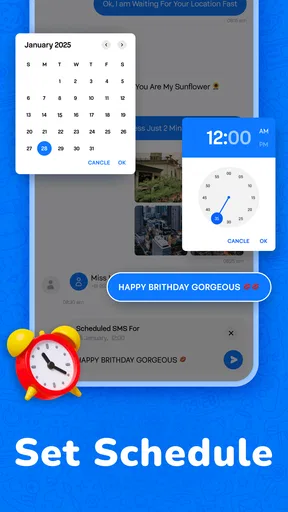
- No built-in scheduling for messages.
- Occasional lag with large group chats.
- Lacks message translation feature.
- Requires more storage space over time.
FAQs for Messages
What are the main features of the Messages app?
The Messages app offers a variety of features, including text messaging, multimedia sharing (photos, videos, and audio), and support for group chats. It also includes end-to-end encryption for secure communication, customizable notifications, and integration with other apps for enhanced functionality. Some versions may support animated stickers and GIFs.
Is the Messages app secure for private conversations?
Yes, the Messages app is designed with security in mind. It typically includes end-to-end encryption to ensure that only you and the person you're communicating with can read the messages. This encryption protects messages from being accessed by third parties, including the app developer and service providers.
Can I use the Messages app on multiple devices?
The ability to use Messages on multiple devices depends on the platform. For instance, Apple's iMessage can be used across iOS and macOS devices if they are linked to the same Apple ID. On Android, your experience may vary, as some apps require third-party solutions for cross-device syncing.
Does the Messages app support multimedia messaging?
Yes, the Messages app supports multimedia messaging, allowing users to send and receive photos, videos, voice notes, and other multimedia content. The app typically supports popular formats and provides an easy interface for sharing media. Some versions also enable editing or adding text to images before sending.
Are there any customization options available in the Messages app?
The Messages app usually offers various customization options to enhance user experience. These may include changing chat backgrounds, customizing notification sounds, using different message themes, and enabling or disabling read receipts. Users can also manage notification settings to prioritize certain contacts or groups.


